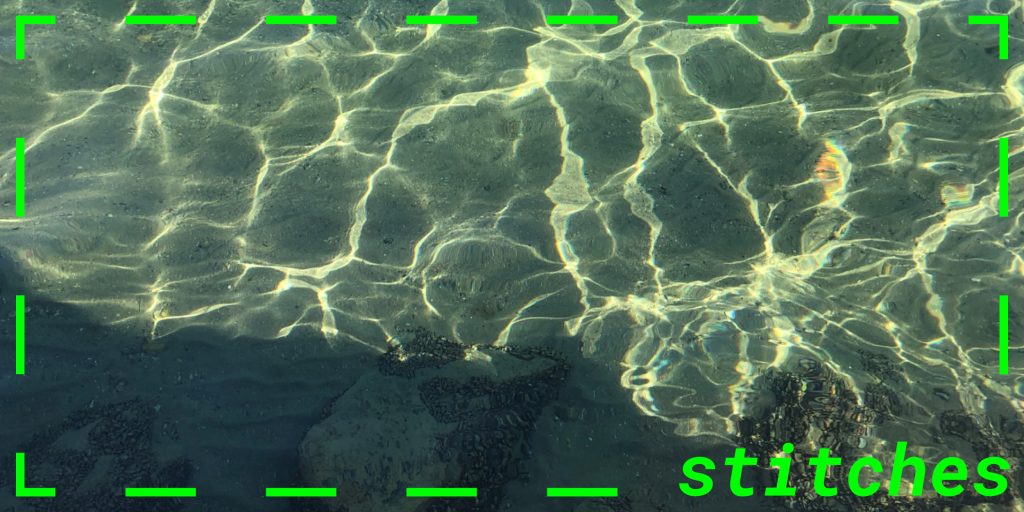
[Photo 1. Lake of Zurich (Zürichsee), October, 2025]
Moniek: Dear María, when a friend who thought we should get to know each other introduced us by email, the subject line read “water in common(s)”. I keep thinking that phrasing already holds so many topics for us to explore together. Ailton Krenak also keeps coming up in my mind. The opening chapter of Futuro Ancestral is where he salutes the rivers before anything else is said. He suggests that the rivers themselves point toward the only kind of future we can meaningfully imagine: one that is ancestral, because it was already here long before us. So I’d like to ask you: what would a salutation to the river look like, as an entry point into our conversation?
María: Dear Moniek, I am thankful to Michael for making this encounter possible and to water for this coincidence or confluence 🙂
In Spanish, salutation combines two words: salud-dar. Health and giving.
Salutation means wishing or longing for health or the best to others. It entails the awareness of others, their presence and ours, and the possibility of any kind of relation. The possibility of a kin. From that perspective, salutation is like the key to a door or the spell to an entrance.
Salutation is what usually comes before a conversation.
I recall that when I was a child, my mom used to scold me because that was the part I was lacking or ignoring when it came to visiting or getting to know people: “I hate that you don’t salute people”. I am aware of how much I have improved at it, especially when it comes to meeting water, rivers, and other more-than-human beings.
To reflect on what a salutation to the river would be, I think of a story my family recalls and still makes them laugh, and the memory of a feeling that has become a kind of ritual. When I was a baby toddler, my family used to spend their weekends visiting the Humadea River, in the east of Colombia. My aunt and my mom still recall these memories with humor: “We used to build small ponds surrounded by a pile of stones as a way to protect you from water. While in there, you liked to take stones to lick and bite them intensely”.
Before I could speak or salute others, I already knew the taste of stones.
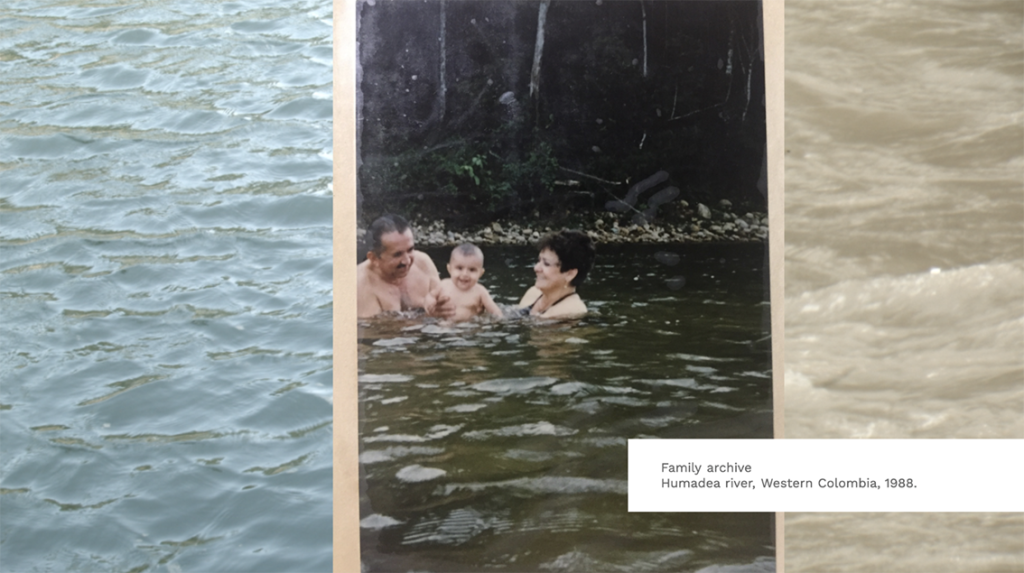
[Photo 2. Familiar photo. Colombia, Humadea River, 1988]
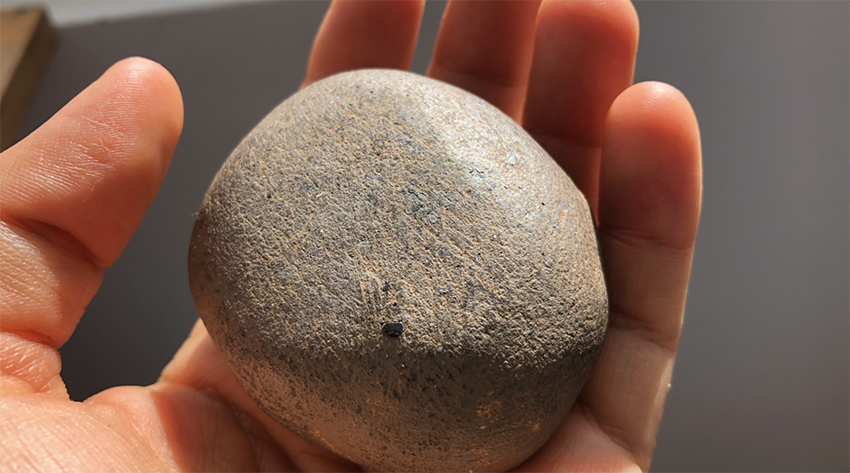
[Photo 3. A stone made and carved of clay from the Meta River in Colombia. 2021]
To continue our dialogue, I want to share this with you: Do Wabura, Adiós al río. A farewell ritual from the Embera Katio Indigenous Community to the Sinú River.
Moniek: Your story of knowing how to relate to stone and water before having words to greet with made me think of my own children, who instinctively inhabit a world of singing trees, living rivers, precious stones everywhere. I keep finding little rocks they bring home, small unbidden archives of what caught their attention during an afternoon out and about.
I think that we both have also spent quite some time gathering things and stories along riverbanks and shores: traces and testimonies that were not necessarily addressed to anyone. What stayed with me from “Do Wabura, Adiós al río” was the line in the lament: ‘Lloraban los muchachos… al ver mi despedida’. The children were crying at the river’s farewell. When the Sinú started disappearing, a broken relationship with the river was all the Embera Katio had left, and all they could hold onto was what could be sung, gathered, carried by hand.
Looking at the photographs of your own family, I started wondering: what would a (Sinú) river family archive look like? And further still: what does it mean to inherit a river you were cut off from? These feel less like questions with straightforward answers than ones I’d like to wander through with you for a bit…
~~~~~~
María: It took me a little longer than expected to come back to our conversation. In the meantime, I travelled, met new people and rivers, and thought of this conversation. I’m finally back, bringing the Magdalena and Fucha rivers into my thoughts and most recent investigations.
Thanks for weaving your questions with the ideas and thoughts I shared with you.
What would a (Sinú) river family archive look like? This question drives me to four different ways of thinking about rivers, family, and archives.
- First. Material archives representing our loving or most memorable rivers. Those rivers where we enjoyed life as children, and where we lived and created meaningful and safe memories. Memories in the form of songs, tales, letters, photo albums, toys, special recipes or dishes.
- Second. Inner rivers such as those running inside us in the form of fluids, streams, and currents. Here I quote a traveler, writer and friend, Agustina Atrio “los viajes y aguas, que como nuestras experiencias, se marcan en nuestros cuerpos dejando huellas en nuestra piel”. Rivers that constitute us. Rivers that made us who we are. Rivers that nurtured us or, conversely, had the potential to harm us. Rivers where/which we grew up. Rivers or currents that move energy in the form of sickness or health. Rivers that nurture our deepest transformations.
- Third. Rivers as archives of humanity. Here I mean rivers as witnesses and repositories of life, death, and all that lives in between. Rivers as witnesses of our steps, decisions, farewells, and mistakes. Rivers as the receivers of what we expelled: our pains, mistakes, carelessness, and our most intimate memories. Even though they are not merely the recipients of everything bad, they are largely tainted and contaminated by it, often completely obliterating wishes and memories of enjoyment and pleasure that we once experienced with(in) them.
- Fourth. Immaterial archives running in another kind of register or dimension: our unconscious. Rivers that feed our imaginaries. Rivers we dream of either as memories of the past or as future and more kind places. Rivers that help us to escape and overcome tough episodes and panic attacks. River-scapes and river-dreams we heard or dreamt of, becoming safer places where to find calm and transform fear —contesting the myth of Charon and the faith of those wandering along the banks, unable to come to a safer place.
What does it mean to inherit a river you were cut off from?
I understand this as the circumstance of a pulsing bond despite distance, silence, and fissures. Here I assume inheriting as a type of bond experienced/felt by leaks and outflows. Like something breaking out or an opened drain.
- Inheritance implies being rooted to a place or any type of belonging.
- Belonging can be understood as a radical movement from a distant posture to a closer one, evolving into a kin. An ethical stance.
- Belonging involves gestures: of care, of bonding and ultimately, of being with.
- Belonging implies (be)longing for something. To miss and care for.
I wonder: how can a flowing body like a river be inherited? Since inheritance means receiving, transmitting, or sharing something, what do we receive when we inherit a river? How does this type of inheritance occur or unfold, and what bonding process does it imply?
In my experience, my grandpa, Atonio, was the mediator of my relations with water. Because of him, I had the chance to safely approach and enjoy other waters — other than the ones of my mom’s womb. Because of him, I had the chance to become familiar with the Humadea and Ariari Rivers (in eastern Colombia). He was responsible for being there, if possible, every weekend, and the one behind our “watery” activities such as the long soakings in the bath surrounded by toys and music from the local radio, washing the car and our dogs, and later on in our lives, building a swimming pool in the backyard so my grandmother was able to follow her medical therapies in a more comfortable setting at her own place.
Because of my grandma, Elsie, and her will to collect the most important moments of the family, we have access to a familiar archive, including lots of photos depicting different life moments, rivers and swimming pools. Because of them, I experienced life and the world in itself as a child in constant relation to different types of waters. If I had to describe that relationship, I would say that they gave the first experiences through which I forged my relationship with water at large, making them safer spaces where to enjoy my own body and build what I conceive as familiar aquatories — a watery version of territory and the way of expressing a deep kin I’m intentionally nurturing as an adult. A bond not bound to a specific place or geography, but one based on a sensory archive I carry with(in) me. A kind of archive that allows me to create safe and familiar spaces wherever I go, where water is accessible (even in my own dreams). For that, I know that what I inherited from them, was not a narrative but a respons-abilty that is the capability to respond to my own needs and life circumstances considering or involving water (thanks Astrida Neimanis for such a beautiful poetic/conceptual connection). It is like a cloud carrying out a set of intuitions (as tools) to re-connect to water around itself.
Moniek: These last questions you posed here can maybe help me to weave several thoughts together to come to an explicit entry point into teaching, design and research practice. Because they feel like the hinge of several things that entered the imaginary of our conversation already.
I was remembering Orlando Fals Borda’s work, in the 1980s, with the fishing and riverine communities of Colombia’s Caribbean coast, where they found: “Nosotros actuamos con el corazón, pero también empleamos la cabeza, y cuando combinamos las dos cosas así, somos sentipensantes.” [We act with the heart, but we also use the mind, and when we combine those two things, we are feeling-thinking.] And how Arturo Escobar later elaborated on this as thinking-feeling with the Earth. Perhaps this is where an answer to belonging starts as a refusal of an extractive posture.
To go beyond the sense that we study rivers, or design for communities, or teach students, as if we stood on the bank rather than in the current. You refer to Astrida Neimanis, and how bodies need water, but water also needs bodies to receive, circulate, and give onwards, all as part of the hydrosphere. If that’s true, then maybe a river can only be inherited by being entered, by letting it move through you, by becoming one of the bodies it needs. This leads me to the question that keeps coming back to me and might resonate with you as well: As designers, researchers, teachers, what do we actually do with that recognition that one’s body is a river, an estuary, an ecosystem?
María: Shiatsu — an alternative Japanese approach to health — understands bodies as containers of vital energy: QI, flowing by meridians or channels like rivers. I like to imagine everybody I relate with and myself as bodies formed by invisible rivers of different types, flowing at different paces. Sometimes active or even turbulent. Sometimes calmed. Sometimes stagnated.
From that approach, everything we do, whether designing, mediating, or teaching, involves bodies and, therefore, the complex forms everyone relates to, reads, and responds to in the world around them. As bodies, we can receive, reject, perceive, act, re-act, respond, co-respond or not, based on what constitutes us. On what is visible and what is not so obvious: complex relational systems such as the nervous system, and the chemical, biological, cultural and sensory memories shaping us.
This year, we had a guest in the course on Water, Memory and the City: Maria Fernanda Franco, a specialist and lover of mountains and rivers. She opened her lecture by asking the students a question: do you have familiar rivers, or rivers that are special to you? After a silence burdened with the unexpectedness of her questions, various rivers emerged: Magdalena, Fucha, Humadea, Guatapurí, Sinú, La Vieja, La Miel, and so on. A huge cartography of rivers and bonds popped up in the classroom — one we did not consider to be so diverse. These questions evidenced the potential memories, affects, and materialities may have in our lives.
When it comes to teaching or mediating pedagogic processes, I like to use personal memories as ways of pointing out the transcorporeality, interconnectedness, and vital flow of water in our lives and personal experiences — thinking of Astrida Neimanis, Bruno Latour, and Jane Bennett. In the task of reflecting on what we do with our bodies of water when we teach, research and design, I have to admit that water at large has allowed me and prepared me for what I do in my diverse practices, by being both the primary substance and materiality of most of my questions and current concerns, and by being an active agent of these processes. Why an agent? Simply, because water(s) have radically changed my own way of interpreting and relating to the world around myself, and in this process, creation, mediation and teaching have given me the space to foster arrangements or situations to imagine and conceive new relations — of all kinds.
I relate to teaching, research and creation as the practices of acknowledging our porousness conditions and the interconnectedness with water(s). From that standpoint, the biggest challenge of what I’m doing is to activate spaces to explore the diverse ways water shapes our memories and the ways they leave traces in us (materially and symbolically). Ultimately, it is the challenge of recognising our own respons-abilities and limits by means of analogies based on different materialities and forms such as boundaries, fissures, leaks, drips, and floods, so that we can have the chance to reconsider our relations to more than human bodies, and the affects and effects involved when we interact with elusive, dense and liquid entities.
In that way, showing or revealing myself in the most honest and porous way through research-creation and teaching, is the possible way I find to belong to (whatever it is), no matter geography or language or format. An intentional practice seeking to counteract extractive postures, by the act of movement and the ethics of encounters between bodies, human and more than human, and the imagination and articulation of transcorporeal relations. In concrete, when teaching, designing and researching, I like to invite the exploration of questions through the combination of thinking with gestures — or sentipensar — such as caring, thinking with, being with, and, if possible, longing for.
Moniek: Thank you, María, for letting this conversation flow at its own pace, through travels, new rivers, and long pauses. I am grateful for the archives you opened, and for sharing your way of understanding inheritance not only as a story passed down but also as intuitions you carry like a cloud. This feels less like an ending than a confluence, and I look forward to the possibilities of continuing to feel-think together. Now I hand the needle over to you, and hope you will continue to stitch.